What Makes an Open World Mobile MMORPG Worth Playing? Key Features Explained
An open world mobile MMORPG is worth playing when every part of the map gives you a reason to go there. Size alone doesn't do that. Density does, together with quests that move you through the world, rewards off the main path and other players who make it feel lived in.
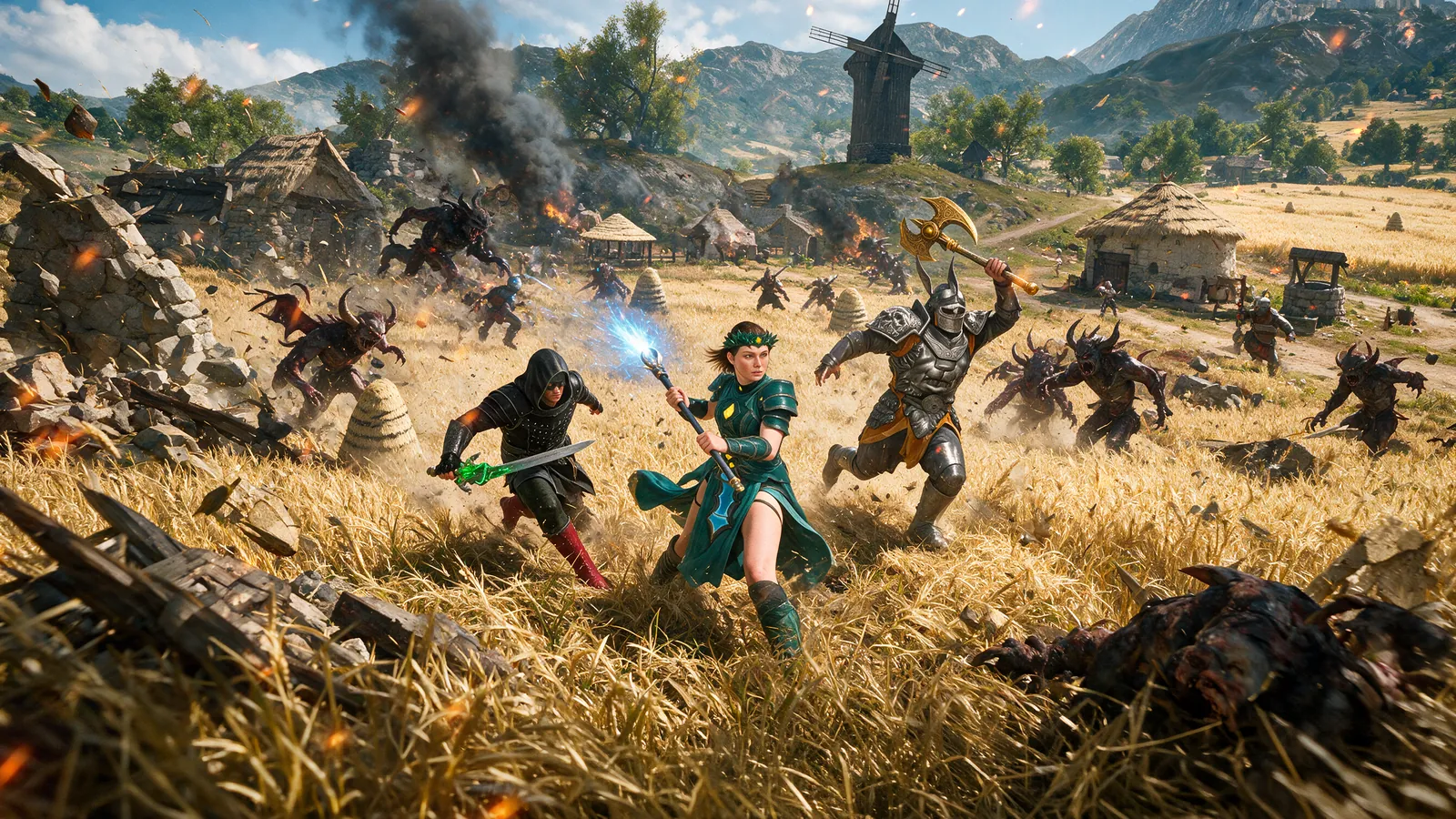
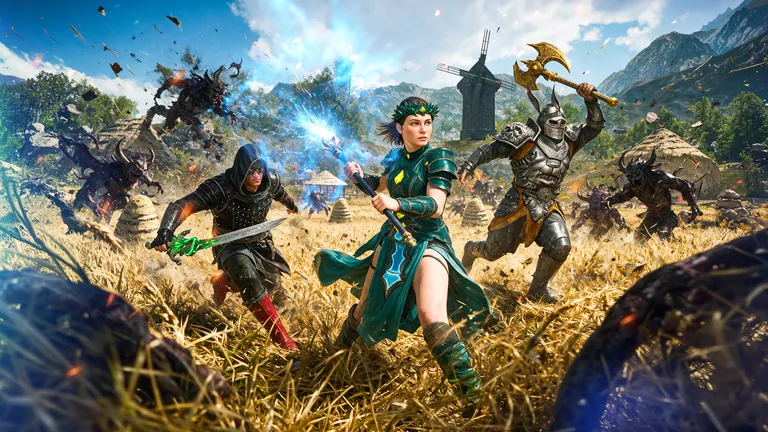
Evil Lands, a mobile action RPG from Rage Quit Games, builds its world as a chain of maps instead of one continent. We use it as the example for each feature below.
Short sessions make the rule stricter. A smaller map with a fight every few steps beats a huge one you mostly run across.
Map design: scale vs playable density
Map design in a mobile MMORPG is a trade between how big the world is and how much happens in it. Playable density means the number of fights, quests and objects you can interact with per minute of walking. Low density turns a big map into a commute.
Evil Lands handles scale by splitting the world into separate maps. Each one has a town with merchants and quest givers, a story campaign plus its own monsters. Maps are grouped into worlds. The twelfth map, for example, is the first map of World 4.
When you finish one map's campaign, the next map takes over as your main goal. Density comes from what fills each map:
- Quest areas mark where campaign steps happen.
- Champions, tougher monsters than the rest, show up on the maps as well.
- From the middle of the fourth map, Contract bosses join them as daily targets.
- Daily Jobs point you at specific spots: champions on one map, a type of monster on another, items to gather somewhere else.
A map you finished weeks ago keeps getting visitors because of that.
Tip
Each room also has a Room Difficulty. In the game's design, it sets the level of the monsters in that room together with what they drop. For mobile MMORPG map design that's a useful trick, because a map you've outgrown can still matter in a harder room.
Quest structure: story-driven vs sandbox freedom
The twelfth map of Evil Lands opens with a ritual. A village leader welcomes you. The High Priestess of a Fire Cult then sends you to three shrines in different parts of the map, each with its own task:
- At the Death Shrine in Veilroot Swamp you collect carved skulls from the risen dead.
- The War Shrine in Verdant Idol Grove wants a blood offering, so you clear every enemy around it.
- For the Healing Shrine at Rootwood Stump you gather flowers from a sacred tree.
A story-driven quest structure works like this: a numbered chain of quests with NPCs, dialogue and fixed places. This map's campaign has twelve of them. The titles alone tell you the tone.
After "Honored To Be Here" come quests like "Into the Fire", "The Trouble with Lizards" and "The Living Rot", before the chain closes with "At Death's Door". The quests send you across different parts of the same map.
Repeatable tasks under the story
Sandbox games work the other way, handing you tools and a world with few set goals. A common middle ground is a main story on top with repeatable tasks underneath. Evil Lands follows that middle ground:
- Daily Jobs give you short goals: kill a set number of monsters, hunt champions on a given map, gather or destroy items, sell something to the town merchant.
- Contracts are daily boss fights. They never appear on the map where your campaign is still running.
- Instance quests send you into separate arenas built for a single quest.
A GO button on each Daily Job opens the map where it can be done. If you're already there, it shows a tip about what to look for. If you're somewhere else, it asks whether you want to travel to that location. Either way you skip the search through menus.
Exploration rewards and points of interest
Exploration rewards are what an open world gives you for leaving the main road. Points of interest are the places that pull you off it: a shrine, a boss arena, an odd landmark. In mobile RPG exploration a detour should end in something, usually loot or a piece of the story.
In mobile RPG exploration a detour should end in something, usually loot or a piece of the story.
Shrines on the twelfth map show how Evil Lands ties its points of interest to quests. Its War Shrine stands in front of an ancient lizard statue. The Healing Shrine is a rotating blue tree.
You reach each one through the campaign. Daily Jobs that ask you to gather items or hunt on that map bring you back to the same ground later.
Loot is most of what you earn out there. Monsters drop gear. Contract bosses give you a daily reason to return to maps you've already cleared. Town turns that loot into progress:
| Where | What it does with your loot |
|---|---|
| Blacksmith | repairs and reinforces items |
| Runemaster | turns runes and dust into runewords for your class |
A runeword either adds a new skill or changes one you already use. Loot you carry home has a second use there.
Divine Challenge is a different kind of destination. It's an event arena split into stages, with its boss waiting outside the arena itself until you reach Stage 7.
When you compare open world RPG features between games, check what sits at the end of a detour. If the answer is nothing, the detour won't happen twice.
Multiplayer presence in open worlds: co-op and PvP zones
On the Evil Lands PvP map, two teams start from their own dens. You can switch sides only from your den, if your team has more players than the other. With even teams, you can trade places with a friend on the opposing side.
PvP is kept apart from the story maps. It doesn't open on day one. The game tells you when PvP becomes available, so your first hours happen on the story maps.
Multiplayer presence means other people sharing your world, either fighting next to you or against you. Splitting it into co-op zones and PvP zones is the common way to give both a purpose.
Co-op on the story maps
Every story map in Evil Lands is a shared co-op room. Other players hunt in the same space. Friends and clanmates can join your room directly. Champions and Contract bosses are where that matters most, since more players means more damage on one target.
Several class skills only pay off in a group:
- Call To Arms, a Warrior boost, raises the maximum health of nearby teammates.
- Fountain of Vitality, a Mage spell, gradually heals every ally standing in its area.
Daily Jobs link the two zones. One type of job asks you to defeat players on the PvP map.
Clans tie both together. In Clan Weekly Bounty, members earn points from their Daily Jobs. The clan's rank sets the rewards for everyone who contributed.
Tip
Talking runs on three channels: friends chat, clan chat and gameplay chat. Gameplay chat is the natural place to tell everyone where a champion just appeared.
Technical constraints of open worlds on mobile hardware
Technical constraints shape mobile open worlds more than design wishes do. A phone has less memory than a PC. It also heats up during long sessions. One common answer is graphics settings that scale to the device.
Dividing the world into separate maps is another way to live with those limits. Each play area stays a size that can be filled with monsters, quests and players. Evil Lands also gives you quality and resolution settings. If a crowded fight feels heavy on an older phone, lower one of them first.
Effects add up fast. A room where several players cast Blizzard, Acid Rain and Mighty Rain on the same champion puts a lot on screen at once. Use that kind of fight to judge your settings. Keep an eye on battery drain during it as well.
How Evil Lands structures its maps
Evil Lands structures its world as a sequence of maps, each one a full chapter. A map gives you a town, a campaign, quest areas, champions and later Contract bosses. Maps are grouped into worlds. The twelfth map, the first of World 4, brings swamps, groves and old shrines.
Every map has its own town with its own NPCs, so a merchant is never far from the fight when your bags fill up with loot you don't need.
Search for an Evil Lands open world in the sense of one continent with no loading screens and you'll find a different design. You move through the world in order, map by map, with other players around you on each one. A typical path through it looks like this:
- Follow the campaign on your current map until its story is done.
- Use Daily Jobs and champions to keep earning gear on maps you know.
- From the middle of the fourth map, add Contracts to your daily routine.
- Join a clan so your daily work also counts toward Clan Weekly Bounty.
- Drop into the PvP map when you want to test your build against other players.
For your first week, pick one map and learn it properly instead of rushing to the next. Find where its champions show up. Then walk to the places its campaign keeps sending you back to. Note which Daily Jobs you can finish on the way.
Play Evil Lands for free